Practical MEAL capacity requires more than knowledge transfer. It connects concepts with real work, usable tools, supported practice, leadership, and institutional application.
What Does MEAL Capacity Mean?
MEAL capacity is the ability of individuals, teams, and organizations to generate and use credible evidence for management, accountability, learning, and decisions. Individual skills, team coordination, leadership support, and organizational systems all influence whether MEAL practice is sustained.
Why Conventional Training Is Limited
Training can remain theoretical when content is generic, exercises are disconnected from real work, learning ends after the workshop, individuals are trained without engaging the system, or organizational constraints remain unresolved.
Attendance and participant satisfaction can describe the training experience, but they do not demonstrate that teams can apply the learning in their work.
Start With a Capacity Assessment
A capacity assessment should examine responsibilities, technical challenges, tools, indicators, participant feedback, data quality, evidence use, institutional requirements, technology, leadership expectations, and realistic opportunities for change.
Use Experiential Learning
Participants should review actual theories of change, revise indicators, test tools, assess data, facilitate reflection, interpret feedback, and prepare recommendations. Learning becomes practical when people apply, receive feedback, revise, and apply again.
Support the System, Not Just the Individual
Capacity building should address supervision, peer support, leadership engagement, system integration, data flow, technology, and organizational policy. Training one person without engaging the system can leave that person unable to apply what they learned.
Build MEAL Leadership
Leadership should understand the purpose of MEAL, ask for evidence, allocate resources, create accountability, and model evidence-informed decision-making. Without leadership engagement, MEAL capacity remains fragile and dependent on individual initiative.
Common Mistakes to Avoid
- Measuring training success by attendance and satisfaction
- Training individuals without engaging the system
- Using generic content that does not relate to actual work
- Treating capacity building as a one-time event
- Ignoring organizational constraints and data quality
- Overloading participants with theory
- Assuming capability equals capacity
Typical Deliverables
- MEAL capacity assessment report
- Learning pathway design and competency framework
- Customized training and facilitation resources
- Toolkits, templates, and SOPs
- Mentoring and coaching records
- Practice assignments and feedback
- Leadership briefs and follow-up recommendations
Immersia Project Experience
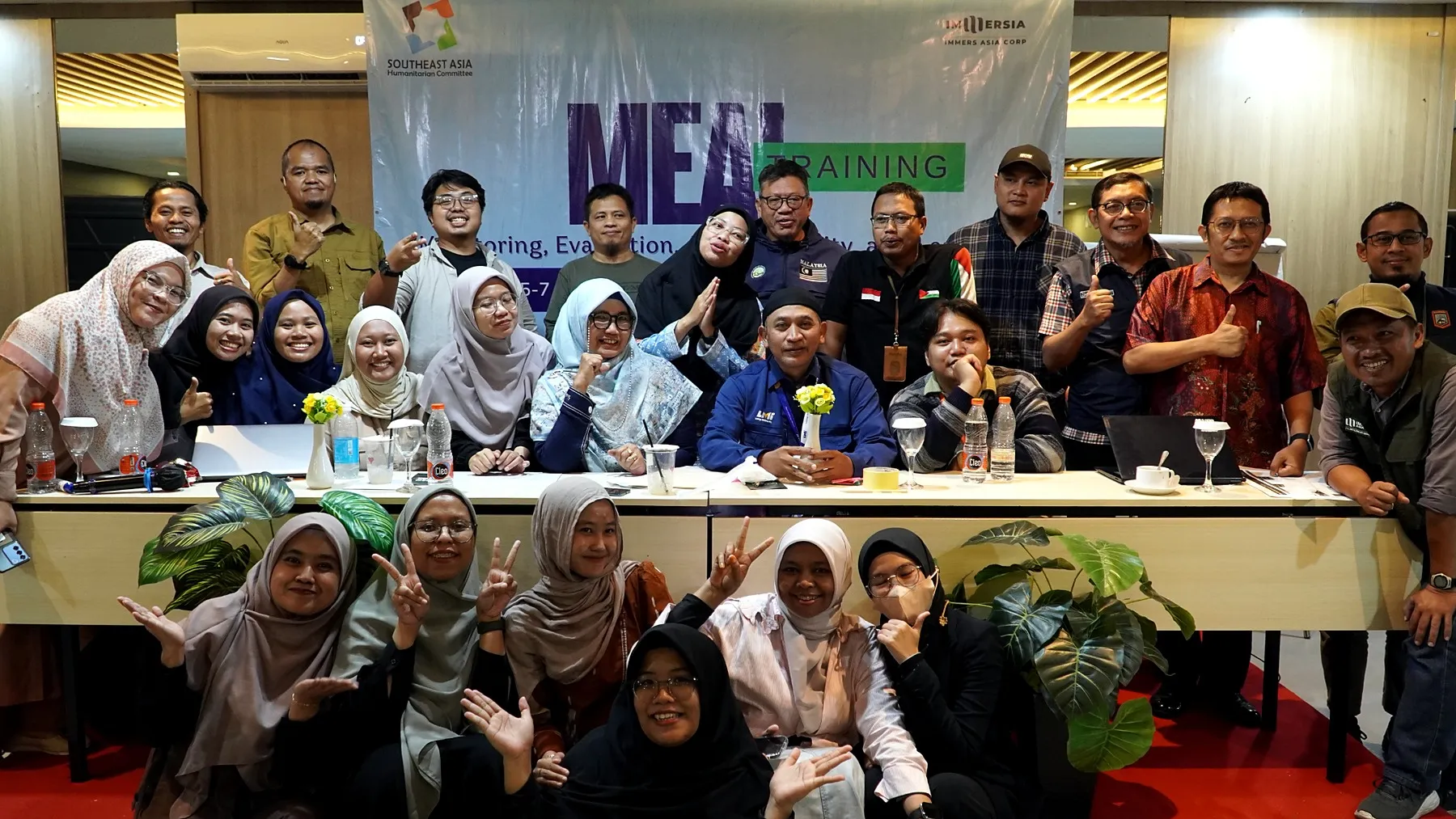
Immersia designed and delivered MEAL capacity building for SEAHUM partner organizations across multiple locations, covering MEAL foundations, tools, indicator development, data quality, reporting, reflection, and leadership engagement.
No participant data, organizational assessments, partner feedback, or confidential performance information is disclosed in this article.
Conclusion
Practical MEAL capacity connects learning with real work, supports the system around the individual, builds leadership understanding, and creates conditions for sustained practice.
References
- ALNAP. (2016). Evaluation of humanitarian action guide.
- BetterEvaluation. (n.d.). MEAL capacity strengthening.
- UNDP. (2009). Handbook on planning, monitoring and evaluating for development results.
- USAID. (2023). How to note: MEAL capacity strengthening.
Does Your Team Need Practical MEAL Capacity?
Immersia can assess current capability, design a tailored learning pathway, and support sustained practice.
Request MEAL Capacity Building